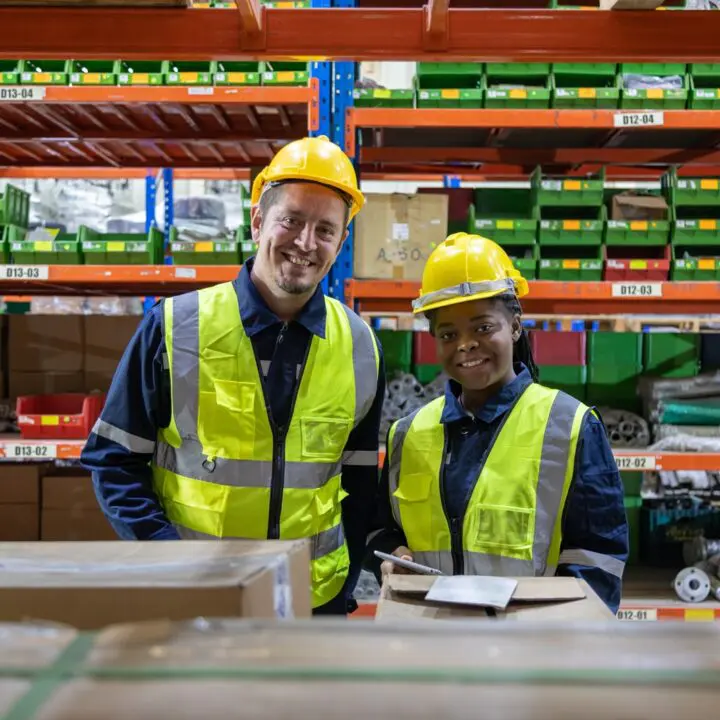
Quick Answer: The most effective pick-and-pack fulfillment strategy depends on your order volume, warehouse layout, and inventory mix. Businesses can improve efficient pick-and-pack fulfillment by choosing the right picking method (piece, batch, zone, or wave), storing fast-moving products near packing stations, and using barcode verification to reduce errors. Together, these strategies help streamline operations, lower labor costs, and speed up order fulfillment.
Your warehouse budget has a hidden drain—and it’s not packaging materials or carrier fees. It’s walking. Studies show that up to 50% of a picker’s time is spent traveling between aisles rather than actually picking. Multiply that across an entire team, and you’re paying for a lot of steps that never move a single order closer to the door.
For small and growing businesses, this inefficiency often stays hidden. Order volumes are manageable, timelines feel reasonable, and the current setup seems to work well enough. But as your business scales, traditional “one picker, one order” fulfillment becomes a serious bottleneck—missed ship windows, escalating labor costs, and frustrated customers.
The good news? You don’t need a complete warehouse overhaul to see major improvements. By adopting the right pick-and-pack fulfillment strategy, repositioning your inventory, and adding a simple verification step, many operations could reduce fulfillment time by as much as 30%, depending on their warehouse layout and picking processes.
The 4 Core Picking Methods Explained
Not all picking methods are created equal. The right approach depends on your order volume, warehouse size, and product mix. Here’s a breakdown of the four core methods used in professional warehouses today.
Piece Picking (Discrete Picking)
Piece picking—also called discrete picking—is the most straightforward method. One picker walks the warehouse floor and fulfills one single order from start to finish before moving on to the next.
This approach is easy to train staff on and naturally produces high accuracy since each order gets individual attention. For small operations, low daily order volumes, or highly specialized products that require careful handling, piece picking is a perfectly reasonable starting point.
The limitation shows up fast as you grow. Because pickers repeatedly travel to the same locations for different orders, travel time balloons. What works for 20 orders a day becomes untenable at 200.
Batch Picking
Batch picking solves the travel problem by grouping a set of similar or identical items for multiple orders into a single trip. Instead of walking the warehouse once per order, a picker collects everything they need for a batch of orders simultaneously—aggregating them all into one cart—before sorting items into individual orders afterward.
This method is particularly effective during promotional flashes or high-demand periods when hundreds of customers are ordering the same SKU. The trade-off is the additional sorting phase at the end, which requires a well-organized packing station to keep things moving.
For fast-moving SKUs, the time saved on travel far outweighs the time spent sorting.
Zone Picking (the “Bucket Brigade”)
Zone picking divides the warehouse into distinct physical sectors. Each picker stays within their assigned zone, selecting only the items from their area that belong to an incoming order. Once their portion is complete, the order tote passes to the next zone.
This method shines in large warehouses with high SKU counts and multi-item orders. Pickers become experts in their zones, reducing errors and preventing the floor congestion that happens when everyone is crisscrossing the same aisles. Zone picking also works well when certain areas require specialized handling or equipment.
The challenge is balance. If one zone consistently receives heavier order loads than others, it becomes a bottleneck that slows the entire operation. Careful workload analysis and zone sizing are essential to keeping the flow even.
Wave Picking
Wave picking takes a scheduling-first approach. Orders are grouped into specific time windows—“waves”—based on variables like carrier pickup times, shipping deadlines, item commonality, or staff shift patterns. The goal is to ensure that picked orders are ready to ship exactly when they need to be, not a moment too late.
This method is best suited for high-volume, omnichannel warehouses managing multiple carriers and tight delivery windows. Aligning picking activity with outbound logistics dramatically reduces idle time at the dock. The downside is complexity—wave picking requires a robust warehouse management system (WMS) to coordinate schedules and adapt to real-time changes. Without that infrastructure, the efficiency gains can quickly unravel.
The table below offers a quick side-by-side comparison to help you identify which method aligns with your current operation:
| Method | Best for | Key Advantage | Key Limitation |
| Piece Picking | Small operations, low volume | Simple to implement; high accuracy | Inefficient at scale |
| Batch Picking | Fast-moving or shared SKUs | Cuts travel time significantly | Requires post-pick sorting |
| Zone Picking | Large warehouses, high SKU counts | Reduces congestion; enables specialization | Requires careful zone balancing |
| Wave Picking | High-volume, multi-carrier operations | Syncs picking with shipping schedules | Needs advanced WMS to execute |
Golden Real Estate—Your Warehouse Layout Strategy
Choosing the right picking method is only half the equation. Even the most efficient picker will waste time if your highest-demand products are stored in the furthest corner of the warehouse.
Not all warehouse space carries equal value. The physical placement of your inventory needs to reflect your actual sales velocity—and that starts with an ABC analysis.
Here’s how the breakdown typically looks:
- A-SKUs (Fast-Movers): The roughly 20% of your products generating about 80% of your orders. These are your top priority.
- B-SKUs (Medium-Movers): Steady, predictable sellers that move regularly but not at the same pace as A-SKUs.
- C-SKUs (Slow-Movers): Long-tail products that sit on shelves for extended periods and are picked infrequently.
The principle is straightforward: your A-SKUs should occupy your “golden real estate”—eye-level shelves positioned as close as possible to your packing stations. This single change can dramatically reduce the average travel distance per pick, which compounds into significant time savings across hundreds of daily orders.
Once you’ve run your velocity analysis, reevaluate your layout quarterly. Sales patterns shift, promotions change product velocities, and seasonal demand can turn a C-SKU into an A-SKU overnight. A layout that was optimized three months ago may already be due for a refresh.
The Two-Step Verification System for Near-Zero Error Rates
Speed means nothing if orders ship incorrectly. A mis-pick—wrong size, wrong color, wrong item—triggers a cascade of costs: return shipping, replacement processing, customer service time, and, critically, the erosion of customer trust.
The most reliable way to protect accuracy without slowing fulfillment down is a hard separation between the picking phase and the packing phase, supported by barcode verification at both points.
Here’s how the workflow operates:
- Step 1 – Pick Verification: As the picker retrieves each item from its bin, they scan it with a mobile RF barcode scanner. The scan confirms the item matches the order before it ever leaves the shelf.
- Step 2 – Pack Verification: The item arrives at a dedicated packing station, where a separate team member performs a second barcode scan against the digital order invoice before the box is sealed.
This double-scan pipeline is the industry standard for a reason—it brings error rates down to under 0.3%. Each scan creates a digital checkpoint that’s logged, traceable, and auditable. For businesses using pick, pack, and ship services at scale, this verification step is what separates professional operations from error-prone ones.
The investment is minimal. The ROI—measured in returns avoided, customer complaints reduced, and repeat purchases preserved—is substantial.
How to Map Your Transition: A 3-Step Roadmap
Knowing the right strategies and actually implementing them are two different things. Warehouse changes carry real risk if approached without a plan, so here’s a simple roadmap for getting started without disrupting your current operations.
- Step 1: Run a Data Audit. Export your last 90 days of order data and run an ABC velocity analysis on your SKUs. This gives you the evidence you need to make layout decisions confidently rather than based on gut feel.
- Step 2: Evaluate Your WMS. Before adopting batch or zone picking, confirm that your warehouse management software supports the routing rules those methods require. If it doesn’t, this is a critical gap to address.
- Step 3: Pilot Before You Scale. Don’t reorganize your entire warehouse overnight. Start with a batch-picking pilot using your top five highest-velocity A-SKUs. Measure the results—pick times, error rates, labor hours—and use that data to build the case for a wider rollout.
This phased approach reduces operational risk, builds team confidence, and gives you real-world data to guide each subsequent improvement.
A Faster Warehouse Starts with Smarter Systems
Speed on the warehouse floor isn’t about telling your staff to move faster. It’s about giving them fewer steps to take and better tools to work with. By matching the right picking methodology to your order profile, positioning your fastest-moving inventory closest to your packing stations, and verifying accuracy at every stage, your warehouse shifts from a cost center into a competitive advantage.
For growing businesses that want to move fast without the overhead of managing all of this in-house, APS Fulfillment offers efficient pick-and-pack fulfillment services built around exactly these principles. As a full-service pick-and-pack fulfillment services provider in Florida, APS handles everything from same-day shipping to multi-channel order management, so you can stay focused on growing your business.
Ready to optimize your fulfillment operations? Request a free quote from APS Fulfillment today.
Frequently Asked Questions
What is the most efficient pick-and-pack fulfillment strategy for small businesses?
For most small businesses starting out, piece picking is the simplest option. As order volumes grow, transitioning to batch picking for fast-moving SKUs is typically the most impactful first upgrade—it cuts travel time significantly without requiring complex technology.
How does warehouse layout affect fulfillment speed?
Warehouse layout has a direct impact on how far pickers travel per order. Placing your fastest-moving A-SKUs closest to packing stations—in the golden zone—could reduce average travel distance and could cut total pick time by 30% to 50%.
What is the difference between batch picking and zone picking?
Batch picking groups multiple orders and fulfills them in one trip, then sorts items at the packing station. Zone picking divides the warehouse into sections with dedicated pickers in each area, passing order totes between zones. Batch picking suits operations with overlapping SKUs; zone picking works best in large warehouses with high SKU counts.
How do I reduce pick-and-pack errors?
A two-step barcode verification process—scanning items at the bin and again at the packing station—is the most reliable method. This double-scan pipeline brings error rates to under 0.3% and is considered the industry standard in professional fulfillment operations.
When should I consider outsourcing to a pick-and-pack fulfillment provider?
If managing fulfillment in-house is consuming time and resources that could go toward growing your business, outsourcing is worth exploring. A provider like APS Fulfillment offers scalable pick, pack and ship services with same-day shipping capabilities, multi-carrier partnerships, and integrated e-commerce solutions.