The first 99% of a product’s journey is often a masterpiece of efficiency. Pallets move seamlessly from manufacturing floors to distribution centers, and line-haul trucks glide across interstate highways with predictable precision. Yet, all that logistical success can unravel in the final 50 feet—the distance from the delivery truck to the customer’s front door.
For retailers dealing in furniture, fitness equipment, or heavy appliances, this “final mile” is where the battle for customer loyalty is won or lost. It is the friction point where oversized delivery often fails. Unlike a standard parcel that can be left on a porch, large items require coordination, physical strength, and specialized equipment. When these elements are lacking, the result is missed appointments, drivers refusing to navigate stairs, damaged goods, and frustrated customers who may never return.
Mastering the delivery of large goods requires the acknowledgement that standard shipping rules do not apply. It demands a specialized strategy that anticipates the unique hurdles of residential delivery.
The 4 Core Challenges of Large-Item Delivery
Moving heavy freight into a residential neighborhood is fundamentally different from backing a 53-foot trailer into a commercial loading dock. Retailers who attempt to treat these two scenarios the same often face four distinct operational roadblocks.
Challenge #1: Access Restrictions
The physical environment of a customer’s home is the first major hurdle. Standard less-than-truckload (LTL) carriers operate large tractor-trailers designed for highways and warehouses, not cul-de-sacs or narrow suburban streets. Drivers often encounter gravel driveways, low-hanging tree branches, or apartment complexes that prohibit large vehicles. When a truck physically cannot reach the destination, the shipment is either returned or stranded at a local terminal, forcing the customer to arrange their own pickup—a logistical nightmare that kills the customer experience.
Challenge #2: Scheduling Friction
In the parcel world, a tracking number is usually enough. For large items, “out for delivery” is insufficient information. Customers cannot stay home from work for a vague 12-hour window to sign for a sofa. When carriers fail to provide narrow, reliable time slots, appointments are missed. This scheduling friction leads to failed delivery attempts, which doubles the transportation cost for the retailer and infuriates the end consumer.
Challenge #3: Safety & Liability
The risk of injury increases exponentially with the weight of the product. Without the proper equipment or a two-person team, offloading a 300-pound treadmill poses a severe safety risk to the driver and the customer. Furthermore, maneuvering heavy items through a home increases the liability for property damage—scratched hardwood floors, dinged drywall, or broken merchandise—turning a sale into an expensive insurance claim.
Challenge #4: Cost Fluctuation
Profit margins on large items can erode instantly due to “accessorial fees.” These are the surprise charges that appear on an invoice after the fact. If a driver needs to rent a liftgate, wait for a customer, or attempt a re-delivery, those costs are passed back to the merchant. Without a proactive strategy, these variable costs make it nearly impossible to predict the true profitability of an order.
The 3PL’s Specialized Service Toolkit
To overcome these challenges, successful retailers partner with third-party logistics (3PL) providers who treat oversized delivery as a specialized discipline. A 3PL doesn’t just book a truck; they deploy a specific toolkit designed to navigate the complexities of residential freight.
Carrier Vetting & Network
A competent 3PL understands that the cheapest carrier is often the most expensive in the long run. Instead of relying on generalist freight companies, they maintain relationships with niche final-mile carriers who specialize in residential delivery. These carriers are accustomed to navigating neighborhoods and interacting with consumers. Furthermore, a 3PL utilizes multi-carrier integration, ensuring geographic flexibility. If one carrier struggles in the Pacific Northwest, the 3PL can seamlessly switch to a regional expert, building redundancy into the supply chain.
Defining Delivery Tiers
Clarity is the antidote to confusion. A 3PL helps retailers define and sell specific service levels so customers know exactly what to expect. This usually breaks down into three tiers:
- Curbside/Threshold: The most economical option. The driver unloads the item at the end of the driveway or the first dry area (like a garage). It requires the customer to handle the item from there.
- Room of Choice: The delivery team brings the item inside the home and places it in a specific room, even if that involves navigating stairs.
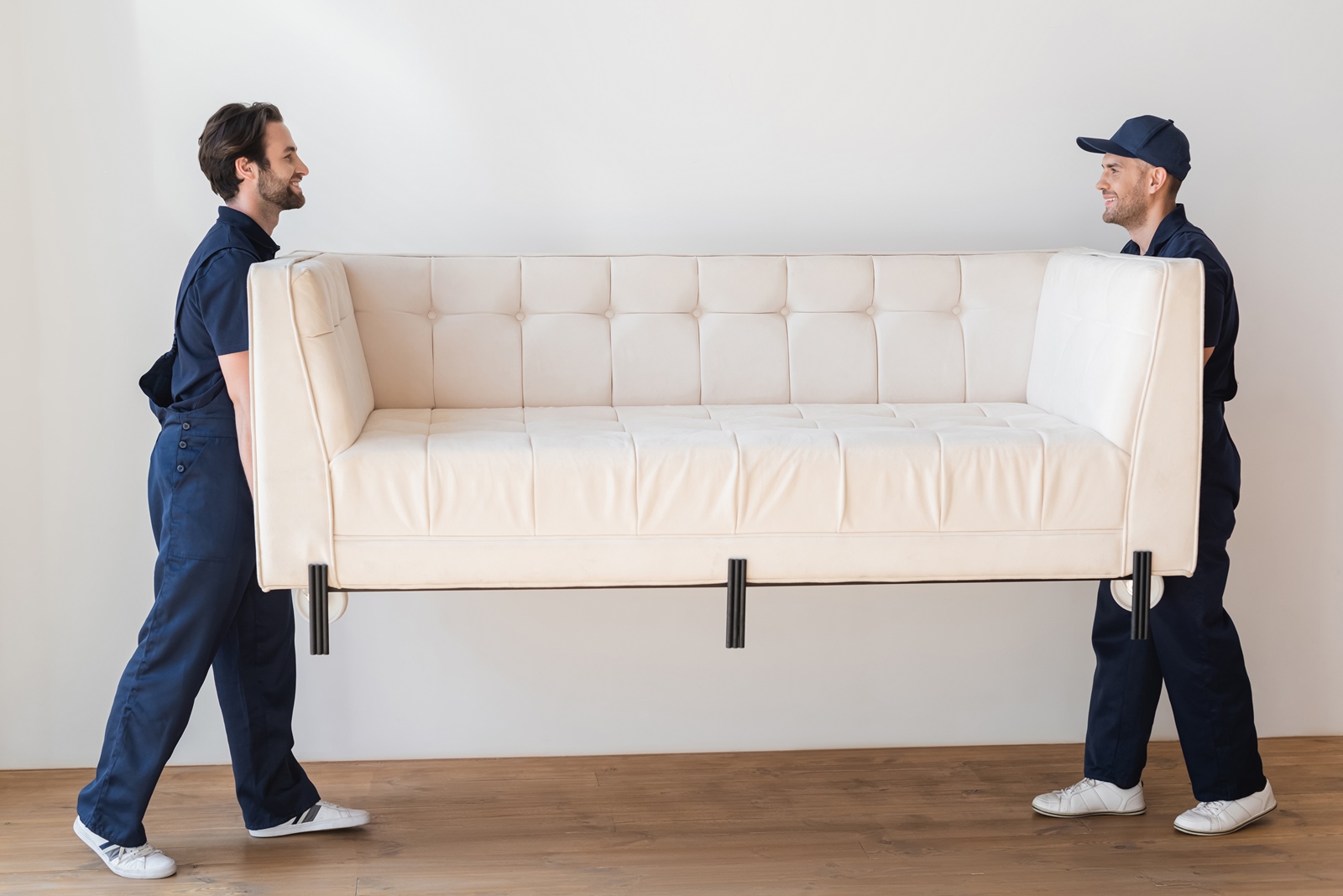
- White Glove Service: The premium experience. This includes unpacking, debris removal, and often basic assembly or setup, such as attaching legs to a couch or plugging in an appliance.
Essential Equipment Management
For any item over 150 lbs delivered to a location without a loading dock, a liftgate is not a luxury—it is an imperative. A liftgate is a hydraulic platform on the back of a truck that lowers freight to the ground. Standard freight quotes often assume a loading dock is available. A specialized 3PL ensures that every residential order is flagged for a liftgate-equipped vehicle, preventing the dreaded scenario where a driver arrives but cannot physically get the product off the truck.
Technology: The Communication Bridge
If equipment handles the physical weight, technology handles the mental weight. The right software bridges the gap between the warehouse and the customer, providing transparency that standard freight tracking lacks.
- Appointment Scheduling Integration: Modern 3PL systems integrate directly with the shopping cart or post-purchase platforms, allowing customers to self-select a delivery slot—not just a date. This autonomy drastically reduces missed deliveries because the customer is committed to a time that they chose.
- Proactive Alerts: Silence causes anxiety. The best oversized delivery service providers automate a sequence of communication: a confirmation when the item ships, a notification when it reaches the local hub, and a critical “30 minutes out” call or text from the driver.
- Proof-of-Delivery (POD): The job isn’t done until the paperwork is signed. Drivers utilize mobile apps to capture signatures, take photos of the item in the home, and note the condition of the packaging. This digital POD provides transparent liability protection for the merchant and minimizes fraudulent damage claims later.
Deliver Excellence, Not Headaches
In the world of e-commerce, the delivery experience is the product experience. No matter how high-quality your furniture or equipment is, a nightmare delivery will result in a one-star review. Oversized logistics is an investment in customer satisfaction. It requires accepting the complexity of specialized equipment, niche carriers, and high-touch communication.
Retailers do not have to become logistics experts to solve this problem; they just need the right partner. By understanding how to deliver large items efficiently, you protect your bottom line and your brand reputation. Partnering with APS Fulfillment means leveraging a network designed for these exact challenges. It ensures you deliver a premium product with a matching premium delivery experience, securing the five-star reviews and repeat business your brand deserves. Request a free quote today!